
Written by MaidEX Cleaning Services Editorial Team · Reviewed by Milad Hoseini, Founder & CEO · Published October 15, 2026 · 6 min read
The short version
If you wipe your glass shower door, it dries, and the cloudy film is still there — you’re using the wrong thing. But in Metro Vancouver the water is soft, so that film is almost always soap scum, not hard-water scale. The fix is a mild acid — warm white vinegar, left to sit, then a baking-soda scrub — not a heavy descaler. Then a 20-second squeegee after each shower keeps it clear.
Most “remove hard water stains” advice is written for hard-water cities. In Metro Vancouver it mostly doesn’t apply — and following it sends people buying CLR and water softeners they don’t need. Here’s what’s actually on your glass, how to get it off, and how to stop it coming back — the same approach our cleaners use on bathrooms across the Lower Mainland.
First: in Vancouver it’s probably not hard water
Hard-water stains are mineral deposits — calcium and magnesium left behind when hard water dries. But Metro Vancouver’s tap water is soft — very soft, around 3–4 mg/L hardness — because it comes from mountain watersheds (Capilano, Seymour and Coquitlam) sitting on granite that barely dissolves. So true chalky limescale is uncommon here.
What you’re almost certainly looking at is soap scum: a filmy residue left when soap and body products dry on the glass. It looks like mineral deposit but behaves differently — soap scum smears and wipes when you rub it, while true scale is hard, crusty and resists a cloth. The upshot: you need a mild acid and a little patience, not an aggressive descaler. (More on our local water: is Vancouver’s water hard or soft?)
What you’ll need
- White vinegar (regular 5% grocery kind is fine)
- Baking soda
- A spray bottle, a microfibre cloth, and a non-scratch sponge
- A squeegee (for the prevention step — this is the one that matters most)
You don’t need a $40 specialty spray, and in our soft water you usually don’t need a commercial descaler at all.
The method that works (vinegar + baking soda)
- Warm the vinegar. Microwave a cup of white vinegar for ~30 seconds. Warm vinegar cuts soap scum noticeably faster than cold.
- Coat the glass. Pour it into a spray bottle and wet the whole door — wet, not damp.
- Wait 10–15 minutes. This is the step everyone skips. Spray-and-immediately-wipe gets maybe a third of the film; the wait is what breaks it down.
- Scrub with a baking-soda paste. Mix baking soda with a little water to a toothpaste consistency, apply with a non-scratch sponge, and work in small circles. A little fizz where it meets the vinegar is fine — that’s the reaction doing the work.
- Rinse and dry. Rinse with warm water and dry with a microfibre cloth. Drying matters — letting water air-dry just starts the next layer of film.
For most Metro Vancouver shower doors, that’s back to clear glass.
When it’s really built up
If a door’s gone a year or more without proper cleaning, soap scum can build into a thick haze. Try the vinegar method first with a longer soak and a second pass before reaching for anything stronger. If you do use a commercial acidic cleaner, treat it with respect:
- Ventilate — open a window or run the fan — and wear gloves.
- Never mix it with bleach or any other product.
- Keep it off natural stone, brass and anodized aluminum — it damages all three.
- Apply a thin, even coat, give it just 5–10 minutes (not longer — acid left to dry leaves its own film), light-scrub, then rinse twice, including the frame, hinges and track so residue doesn’t corrode the hardware. Dry with microfibre.
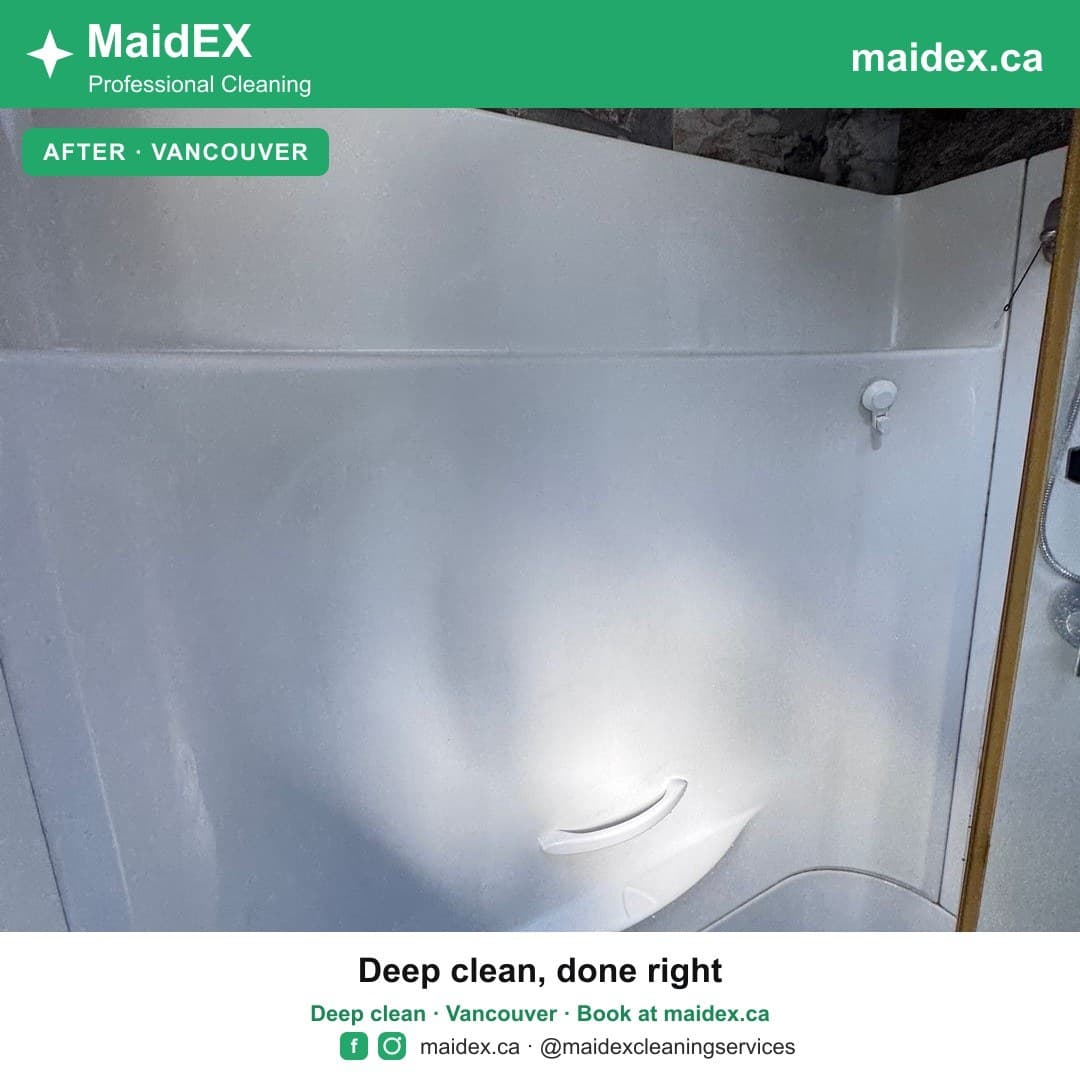
A Vancouver shower reset to clear on a MaidEX deep clean — soap-scum film lifted, glass and tile back to fresh.
When it won’t come off (etching)
If you’ve done both and the glass still shows a spotty haze when you look across it at an angle, that’s probably etching — the surface is pitted, not dirty. Etching can’t be cleaned off; it needs a cerium-oxide polish and a buffer (hours of work, easy to make worse) or replacing the glass insert. For most homeowners it isn’t worth the labour. The good news: most doors that look permanently damaged from a few feet away aren’t etched — they’re just heavily coated.
How to keep it clear
A 20-second habit prevents almost all of this: squeegee the glass after every shower. A $10 squeegee on a suction hook, three or four passes — with little water left to dry, almost no film forms, and a freshly cleaned door stays clear for months. A once-a-week vinegar spray (leave 10 minutes, rinse) keeps it from ever getting out of hand.
One soft-water tip: soft water lathers easily, so use less soap and product than you think — overusing it is what creates most of the scum in the first place. Less product plus a squeegee is the whole game.
What our cleaners do
On a regular clean we start with the vinegar approach because it’s safe around kids, pets and most bathroom finishes. On a first-time deep clean of a really neglected shower we’ll use a stronger cleaner but in a quick application — apply, light scrub, rinse straight away — rather than leaving acid sitting on the glass, which is gentler on the hardware and gets a better result. We also skip Magic Erasers as a default: they work, but they’re mildly abrasive, and weekly use micro-scratches the glass into a permanent haze. And the spot everyone misses — the bottom inch where the glass meets the track, where water sits longest — gets its own pass.
If the glass is past a quick wipe, a reset is exactly what a deep clean is for — MaidEX cleans bathrooms across Metro Vancouver with an eco-friendly product option on request, insured and background-checked cleaners, and a flat price shown online before you book (5% GST, no PST).
Cloudy glass won’t budge? See your price in about 60 seconds.
Flat-rate, 5% GST shown, no PST · Insured & background-checked · Metro Vancouver & the Lower Mainland
Get my instant priceFrequently asked questions
Why does my glass shower door go cloudy in Metro Vancouver?
In Metro Vancouver the tap water is soft, so the cloudy film is almost always soap scum — soap and body-product residue drying on the glass — not hard-water mineral scale. That matters because soap scum lifts with a mild acid like diluted vinegar and a squeegee habit, not a heavy-duty descaler.
Is it hard water or soap scum?
A quick test: soap scum smears and wipes when you rub it; true mineral scale is hard, crusty and resists a cloth. In soft-water Metro Vancouver you’ll mostly be dealing with soap scum. Genuine crusty scale usually points to a specific cause — some Fraser Valley wells/groundwater, or older building plumbing.
What’s the best way to clean soap scum off glass shower doors?
Warm white vinegar sprayed on, left 10–15 minutes, then scrubbed with a baking-soda paste on a non-scratch sponge, rinsed and dried. The 10–15 minute wait is the step most people skip — it’s what breaks the film down so it wipes away instead of smearing.
Do I need CLR or a strong descaler?
Rarely, in Metro Vancouver. Commercial calcium/lime removers are built for hard-water scale, which is uncommon here. For soap scum, vinegar and baking soda almost always do it. If you do reach for a stronger acidic cleaner, ventilate, wear gloves, never mix it with bleach, and keep it off natural stone, brass and anodized aluminum.
How do I keep shower glass from going cloudy again?
Squeegee the glass after every shower — three or four passes, about 20 seconds. With little water left to dry on the glass, almost no film forms. A once-a-week spray of diluted vinegar and a monthly wipe keeps it clear for months.
What if the glass still looks foggy after cleaning?
If a spotty haze remains when you look across the glass at an angle, it may be etching — the surface itself is pitted, not dirty. Etching can’t be cleaned off; it needs polishing (or replacing the glass), and for most homeowners that isn’t worth it. The good news is most doors that look permanently damaged are just heavily coated, not etched.
About the author

Milad Hoseini
Founder & CEO, MaidEX Cleaning Services
Written by the MaidEX Cleaning Services Editorial Team and reviewed by Milad Hoseini, who founded MaidEX in Vancouver. MaidEX provides insured, background-checked cleaning across Metro Vancouver and the Lower Mainland. More about MaidEX →
How this guide was made
This guide draws on MaidEX's hands-on cleaning experience across Metro Vancouver and the Lower Mainland, along with publicly available sources. It was drafted with the help of AI tools, then reviewed and fact-checked by our editorial team and approved by Milad Hoseini, Founder & CEO, before publishing.