
Written by MaidEX Cleaning Services Editorial Team · Reviewed by Milad Hoseini, Founder & CEO · Published September 17, 2026 · 4 min read
Quick answer
For routine cleaning: empty the fridge, wash the shelves and drawers by hand in warm, soapy water (let cold glass reach room temperature first so it doesn't crack), wipe the interior top-to-bottom, then rinse with clean water and dry fully; deodorize with an open box of baking soda. Everyday cleaning doesn't need bleach. After a raw-food spill or a food recall, food-safety authorities (CDC/FDA/USDA) recommend sanitizing — after washing — with a diluted solution of about 1 tablespoon of bleach per gallon of water, then rinsing and drying. Check your model's manual for material compatibility and follow its cleaning instructions.
Why a clean fridge is worth the 30 minutes
Your fridge is the one appliance that touches almost everything you eat. Spills, forgotten leftovers, and sticky drips build up quietly, and before long they start to smell and spread bacteria to fresh food.
A good clean does not need to be a big project. Once you know the order to work in, most fridges take about 30 to 45 minutes, and the payoff is a fresher kitchen and food that lasts a little longer.
Set aside a block of time when your fridge is fairly empty, like the evening before grocery day. You will have less to move and fewer items sitting out on the counter.
What you will need
Keep it simple. Grab warm water, a few clean microfibre cloths, dish soap, and a box of baking soda. That is genuinely all most fridges need.
For tougher grime, mix a couple of tablespoons of baking soda into warm water to make a gentle, food-safe cleaner that cuts through grease without leaving harsh residue.
For everyday cleaning you do not need bleach — warm soapy water or the baking-soda solution is food-safe and works well, and routine harsh chemical sprays can damage plastic surfaces and seals over time. Bleach has one specific place: sanitizing after a raw-food spill or a food recall, where food-safety authorities recommend a diluted solution of about one tablespoon of bleach per gallon of water, applied after washing, then rinsed off and dried. Check your fridge's manual for which surfaces that is safe on.
Step 1: Empty it out and toss the expired stuff
Start by taking everything out. Set items on the counter and, as you go, check dates and give questionable jars a quick sniff.
Be honest with yourself. The half-empty sauces, the mystery containers, and anything past its prime should go straight to the compost or bin. A fridge with fewer forgotten items stays cleaner and colder.
This is also the moment to wipe down the outside of jars and bottles before they go back in, so you are not returning sticky rings to a clean shelf.
If you plan to do a deep clean, you can unplug the fridge for this part. It is optional, but it saves energy while the door is open and lets frost soften if you are also tackling the freezer.
Step 2: Remove the shelves and drawers
Take out the glass shelves and crisper drawers so you can clean them properly. Let cold glass shelves sit for a few minutes to reach room temperature first, because hot water on very cold glass can crack it.
Wash each piece in the sink with warm, soapy water. For dried-on spills, let them soak for a few minutes rather than scrubbing hard.
Rinse well and set everything on a towel to air dry while you clean the inside of the fridge.
Step 3: Wash the inside, then dry it
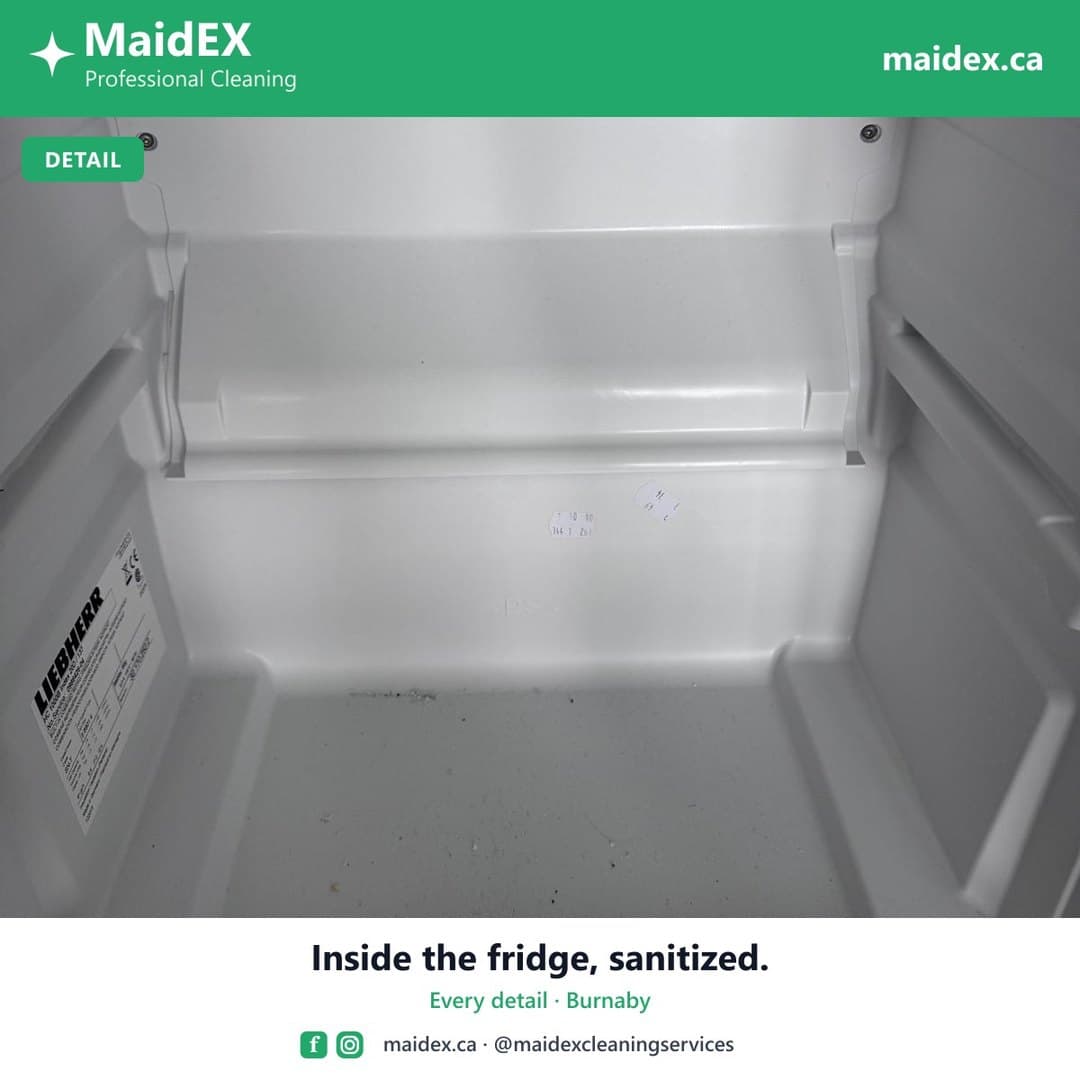
Wipe down the interior walls, floor, and door with your warm soapy water or the baking-soda solution. Work top to bottom so drips fall onto surfaces you have not cleaned yet.
Pay attention to corners and the little channels where liquid pools. A cotton swab or the corner of a cloth gets into tight spots around the shelf brackets.
Once everything is clean, wipe once more with a clean, water-dampened cloth to rinse off any soap, then go back over the inside with a dry cloth. Drying matters more than people expect, because leftover moisture invites mildew and that stale fridge smell.
Return the shelves and drawers only once they are fully dry, then put your food back in.
Step 4: Deodorize, then handle the seals and exterior
To keep things fresh between cleans, leave an open box of baking soda on a back shelf. It quietly absorbs odours and is much kinder to food than scented sprays. Swap it out every couple of months.
Do not skip the rubber door seals, or gaskets. Crumbs and sticky spots collect in those folds and stop the door from sealing tightly, which makes your fridge work harder. Wipe them gently with warm soapy water and dry them well.
Finish with the outside. Wipe the doors, handles, and top, where dust settles. Stainless steel looks best when you wipe along the grain with a slightly damp cloth, then buff dry.
How often should you clean your fridge
A quick wipe of spills as they happen is the real secret, and it takes seconds. Deal with a leaking container the moment you spot it.
Aim for a light wipe-down of shelves and the most-used surfaces every week or two, and a full empty-and-clean like this one every three to four months.
Check the door seals and toss expired items every time you do a bigger grocery run. Little habits keep the deep cleans quick.
When to let MaidEX handle it
Cleaning inside the fridge is detailed work, and on a busy week it is an easy job to keep putting off. If you would rather not spend your evening elbow-deep in the crisper drawer, our team is happy to take it on.
Inside-the-fridge cleaning is an add-on with MaidEX, and it is already included in our move-out and deep cleans, which is perfect when you are handing over a home or resetting after a busy stretch.
Every MaidEX clean comes with a satisfaction guarantee, so if something is not right, we will come back and re-clean it within 24 hours. Our cleaners are insured and background-checked, so you can feel comfortable having them in your Vancouver-area kitchen.
Frequently asked questions
Can I use bleach to clean inside my fridge?
For everyday cleaning you don't need to — warm soapy water or a baking-soda solution is food-safe and effective. Bleach is reserved for sanitizing after a raw-food spill or a food recall: health authorities (CDC/FDA/USDA) recommend a diluted solution of about 1 tablespoon of bleach per gallon of water, applied after washing, then rinsed and dried. Check your fridge's manual, and avoid using harsh cleaners routinely, as they can damage plastic and seals.
How do I get rid of a bad smell in my fridge?
First remove whatever is causing it and wipe the interior clean and dry. Then leave an open box of baking soda on a shelf to absorb lingering odours, and replace it every couple of months.
Do I need to unplug my fridge to clean it?
For a normal clean, no. Unplugging is optional and mainly helpful for a deep clean or when you are defrosting the freezer at the same time. Just work efficiently so the door is not open too long.
Does MaidEX clean inside the fridge?
Yes. It is available as an add-on and is already included in our move-out and deep cleans. Every clean is backed by our satisfaction guarantee with a free re-clean within 24 hours if anything is missed.
Rather leave it to a pro?
MaidEX cleaners are insured and background-checked, and every clean is backed by our satisfaction guarantee. See your price in about 60 seconds.
Book a cleanAbout the author

Milad Hoseini
Founder & CEO, MaidEX Cleaning Services
Written by the MaidEX Cleaning Services Editorial Team and reviewed by Milad Hoseini, who founded MaidEX in Vancouver. MaidEX provides insured, background-checked cleaning across Metro Vancouver and the Lower Mainland. More about MaidEX →
How this guide was made
This guide draws on MaidEX's hands-on cleaning experience across Metro Vancouver and the Lower Mainland, along with publicly available sources. It was drafted with the help of AI tools, then reviewed and fact-checked by our editorial team and approved by Milad Hoseini, Founder & CEO, before publishing.