
Written by MaidEX Cleaning Services Editorial Team · Reviewed by Milad Hoseini, Founder & CEO · Published September 3, 2026 · Updated October 15, 2026 · 10 min read
The short version
Most of a move-out inspection comes down to six spots — the oven door glass, the fridge seals, the bathroom grout and toilet base, inside cabinets, baseboards and corners, and the range-hood filter. Renters tend to over-clean ceilings, dishwasher interiors and washer/dryer drums. In BC the standard is “reasonably clean,” not spotless — but carpets are usually expected to be steam-cleaned if the tenancy ran a year or more. Cleaning in the right order saves roughly a third of the time.
If you’re reading this in the weeks before a move-out, you’re probably not after a generic checklist — you want to know you’re not about to lose a few hundred dollars of your deposit to something avoidable. Fair enough. The list below is built from what our cleaners actually see on move-out jobs across Metro Vancouver, and from what BC renters tell us their landlords flagged — not the “wipe down all surfaces” filler that lives on every cleaning website.
How a BC move-out inspection really goes
Most move-out inspections are quick — often around fifteen minutes. The landlord isn’t white-glove checking every inch; they’re walking a familiar route, looking at a few specific things, and they’ve usually decided in the first few minutes whether the suite is “clean enough” or whether the deduction list is coming out.
That walkthrough almost always starts in the kitchen, not the living room — and within the kitchen, at the oven. So the order you clean in matters as much as what you clean. Get the kitchen right first and the rest of the inspection tends to go easier, because you’ve set the tone.
One BC-specific thing to know: your landlord is required to do a written condition inspection at move-out, and it’s compared against the report from move-in. That move-in report is your baseline — it’s what stops a landlord charging you for a mark or worn patch that was already there. Attend the inspection, get your signed copy, and take your own dated photos of every empty room.
The 6 things landlords actually check (in order)
1. The oven — specifically the door glass
This is the single biggest deduction trigger we hear about. A landlord opens the oven door; if the inside of the glass is brown or hazy, they assume the rest of the oven is worse — even if your racks are spotless. The door glass is also the hardest part for renters to clean, because the haze is usually trapped between the two panes of glass, not on the surface, which is why surface scrubbing never fully works.
On most ovens the door lifts off its hinges and the inner panel unscrews so you can reach between the panes. If you’d rather not take it apart, the next best move is a thick baking-soda paste left to sit for a few hours, then a razor blade held at a shallow angle.
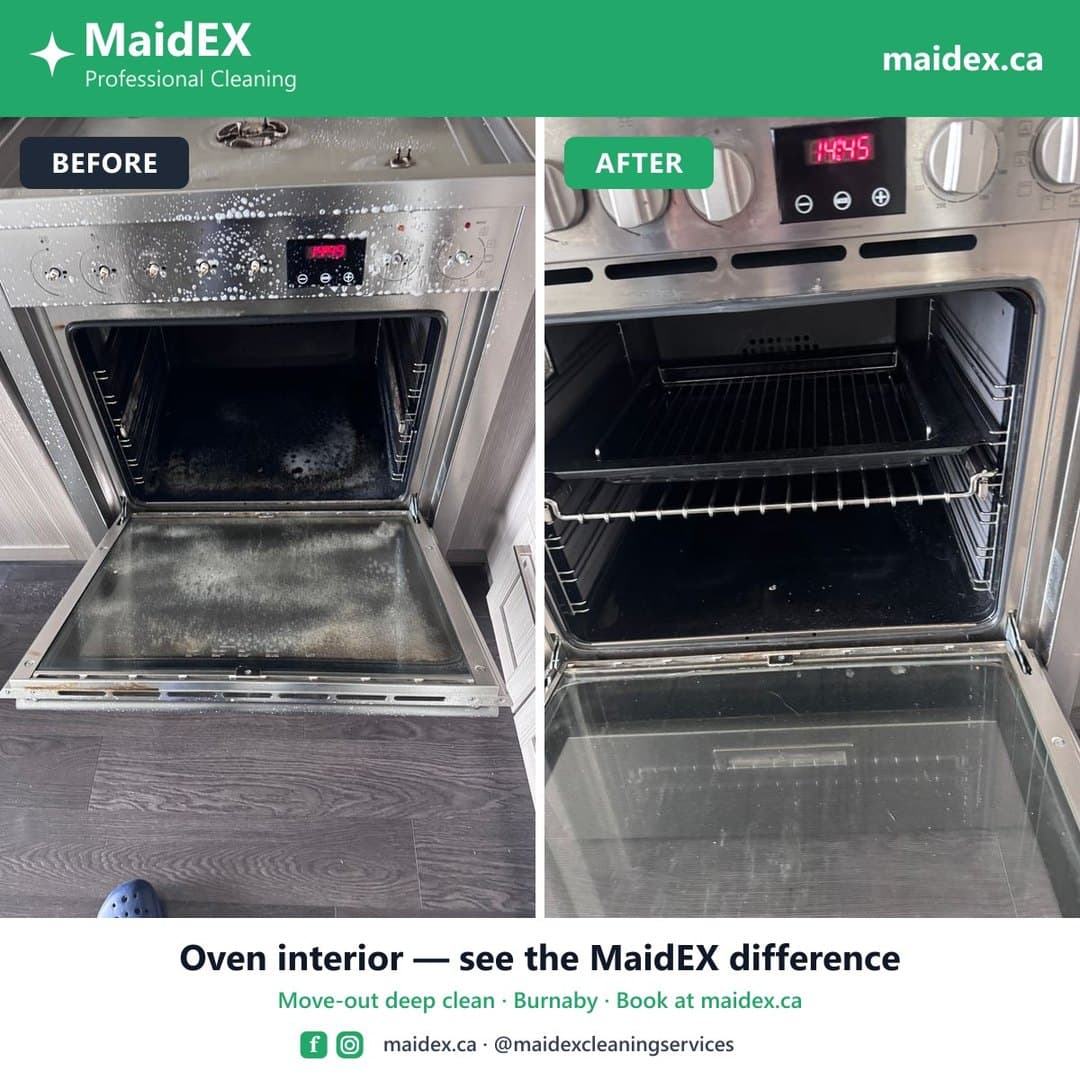
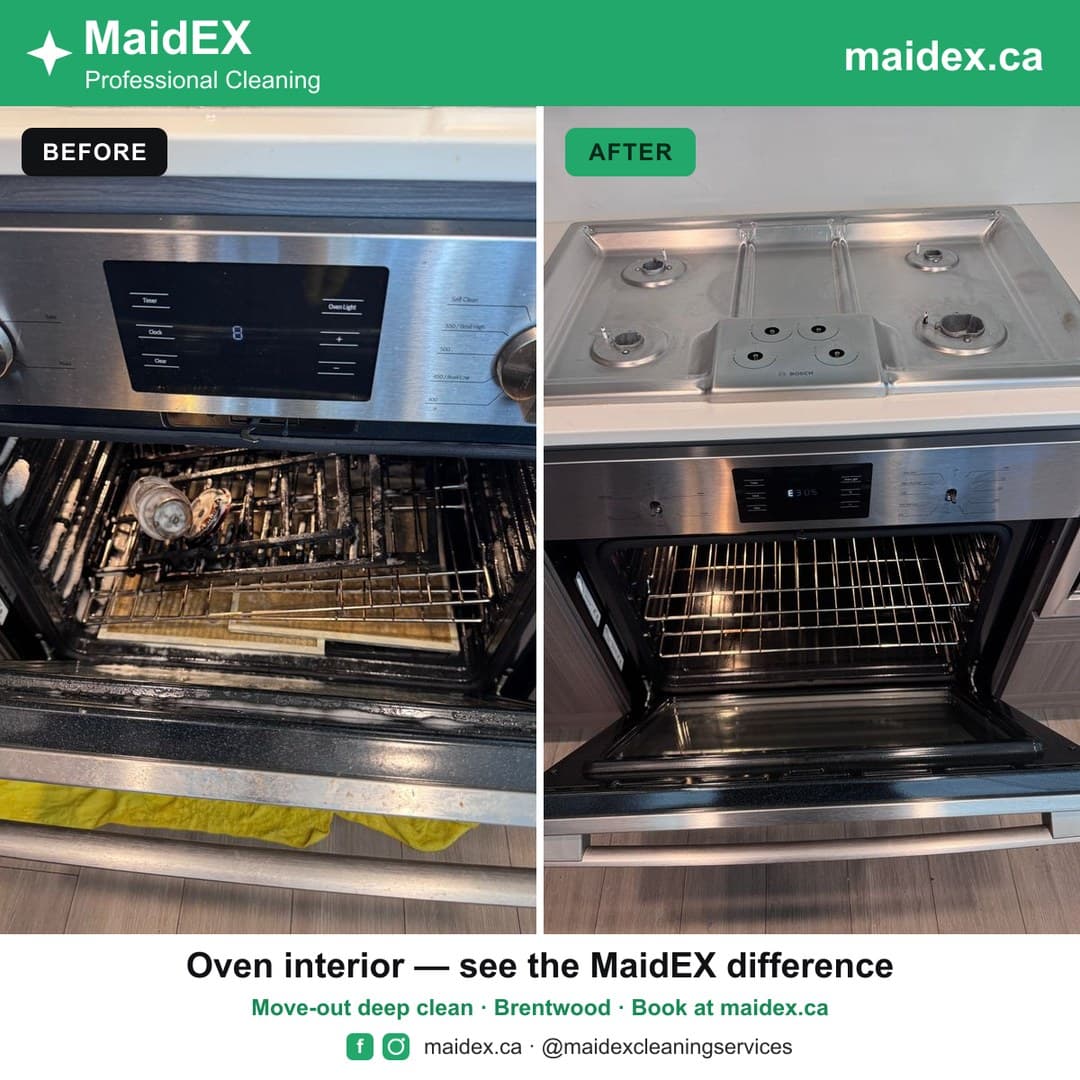
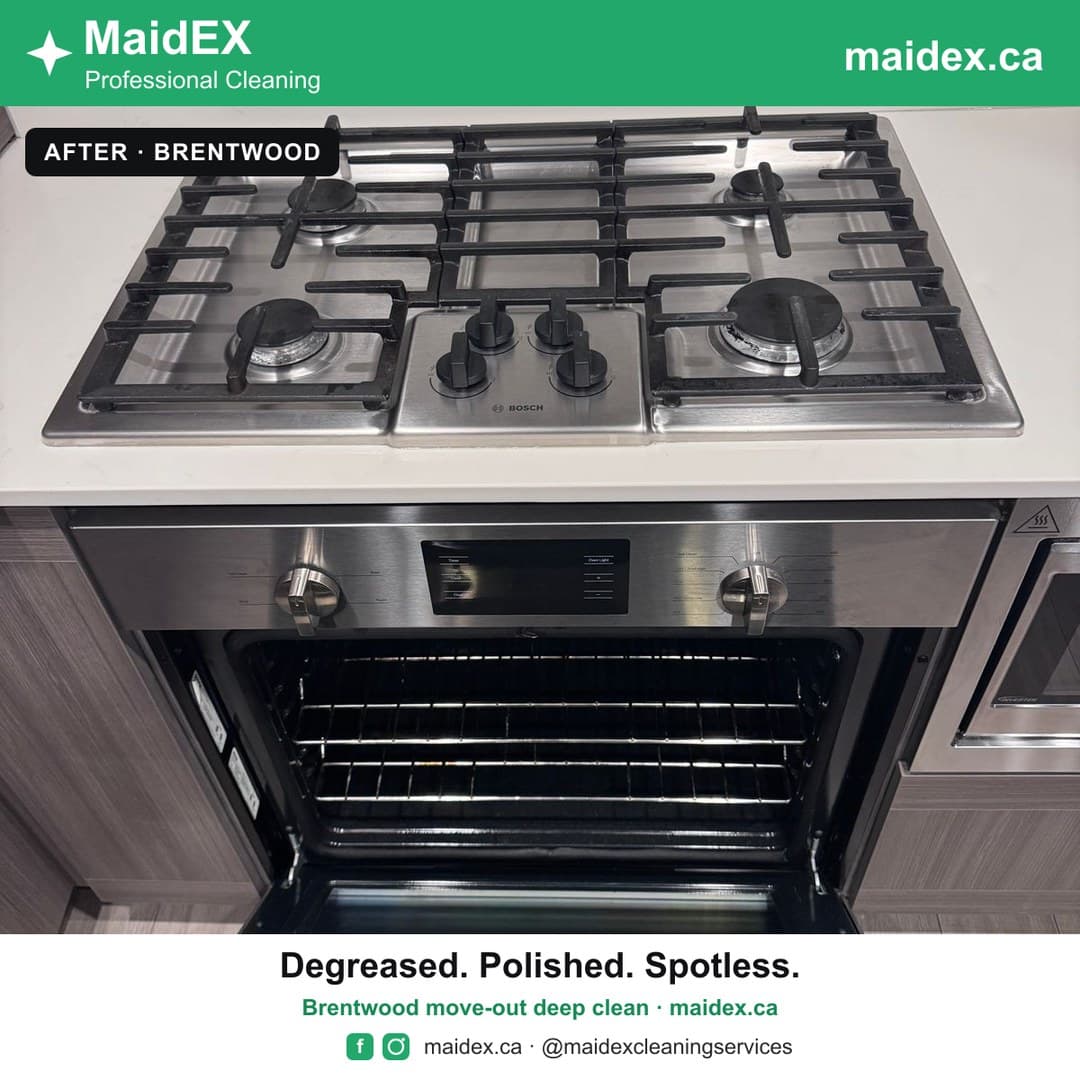
Real ovens from recent MaidEX move-out jobs — the door glass and cavity taken from baked-on grease back to like-new. It’s the first thing a landlord looks at.
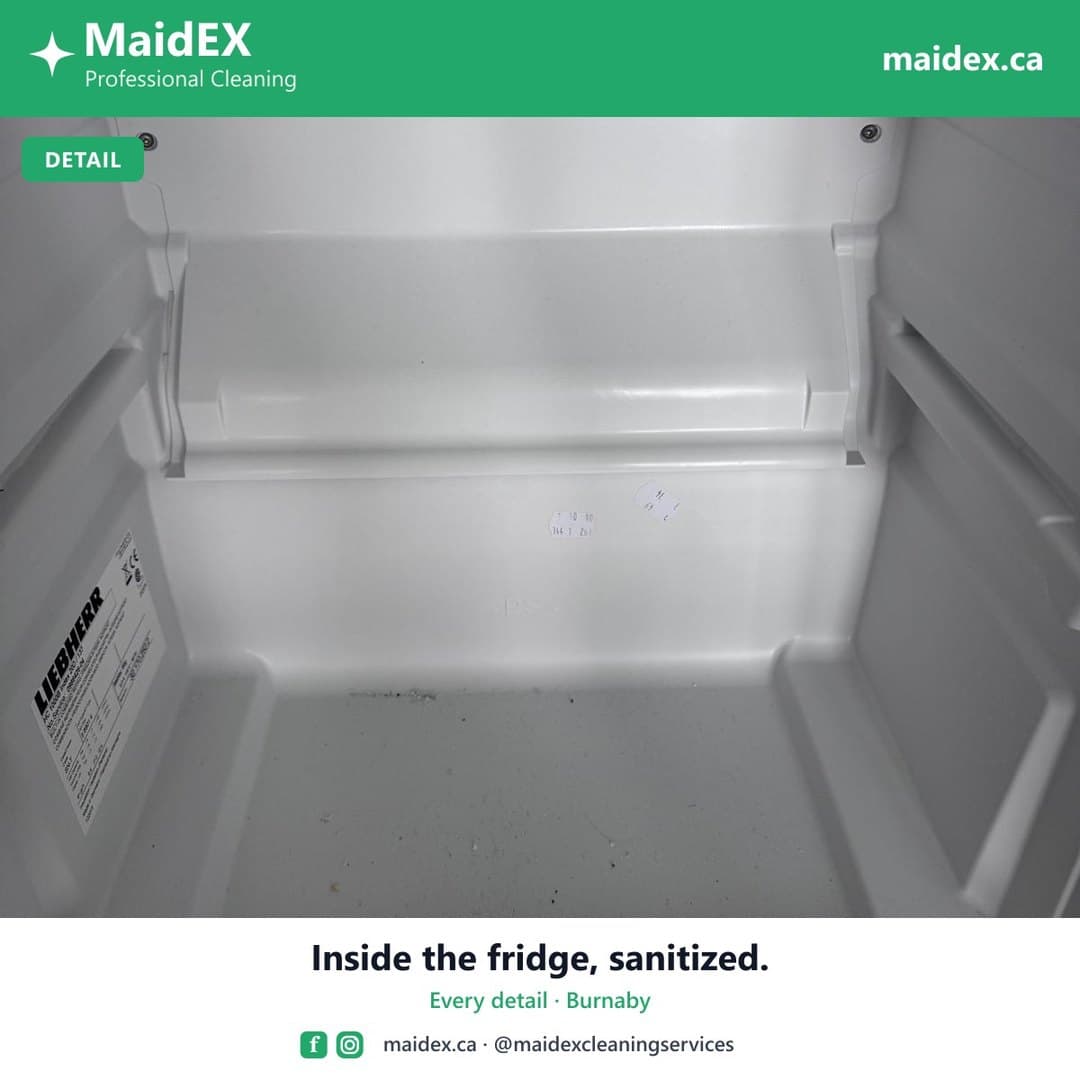
2. Inside the fridge — and the seals
Landlords open the fridge and look at three things: the door seal, the bottom shelf, and the crisper drawers pulled out. The rubber door seal is the part everyone forgets — pull it back gently and you’ll usually find crumbs and sticky residue, sometimes mould. Wipe it with a vinegar solution and dry it before closing. The crisper drawers also leak onto the glass shelf below, drying into a film that’s invisible until the drawers come out — and they almost always come out.
3. The bathroom grout and the toilet base
In the bathroom they check the grout between floor tiles, the caulking around the tub, and the floor around and behind the base of the toilet — the spot that collects splash, dust and hair, and the one most renters tidy around rather than clean. A paste of baking soda and a little hydrogen peroxide, worked in with an old toothbrush, brings discoloured grout back. Note the line: discoloured grout is uncleanliness (your job); cracked or missing grout is wear and tear (not your problem).
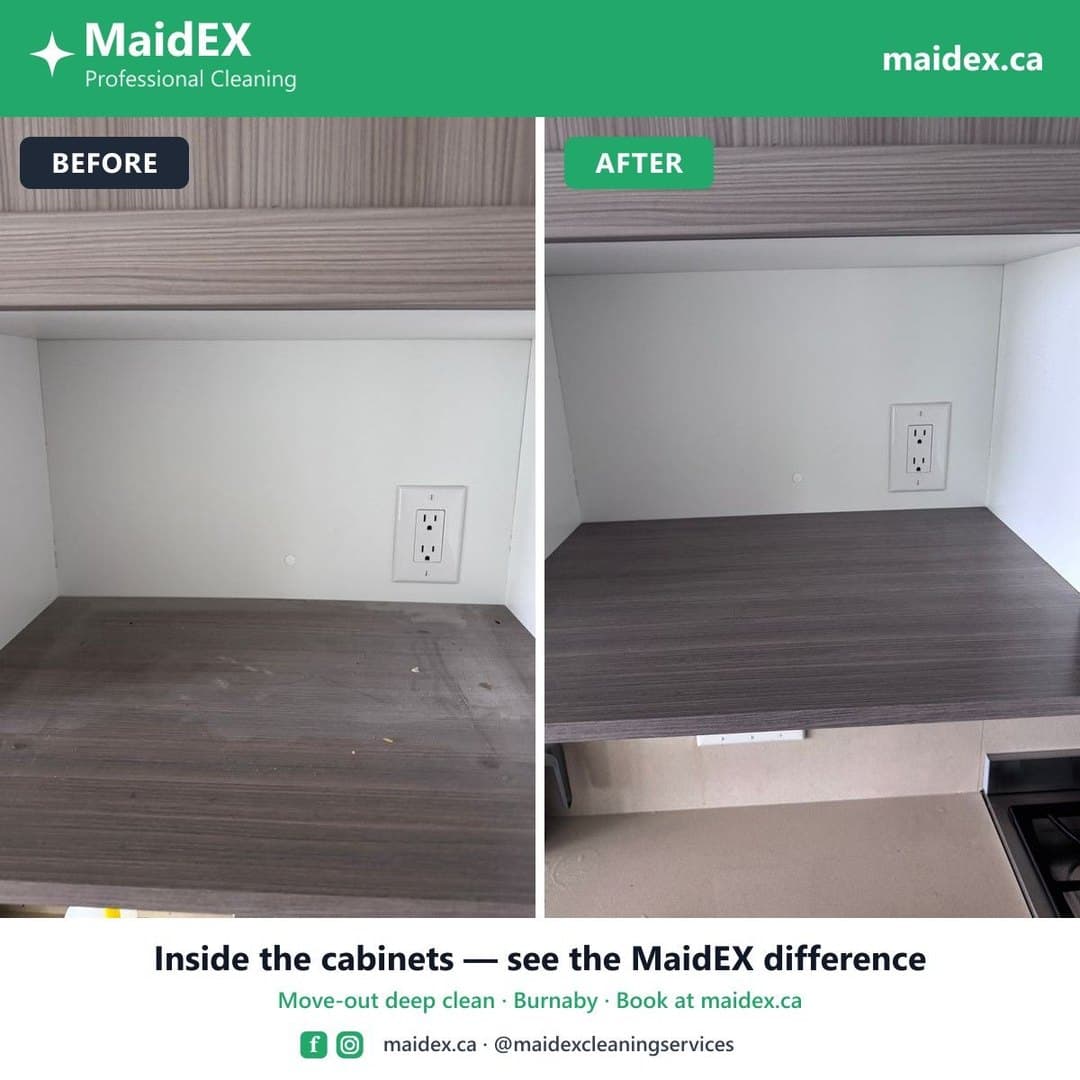
4. Inside the cabinets and drawers
They open all of them — including the one above the fridge you forgot existed. They’re not looking for dust so much as crumbs, sticky rings and shelf-liner adhesive. Take out any liners even if they look fine, wipe each cabinet with a damp cloth then a dry one, and don’t skip under the kitchen sink, where a leaked cleaning-product bottle almost always leaves a sticky ring.
5. Baseboards, corners and behind the doors
The corner where the baseboard meets the floor, and the strip of floor directly behind an open door, are dust magnets — and dust there is the universal tell that a floor was swept but not properly cleaned. A microfibre cloth over a butter knife runs a baseboard fast; a soft toothbrush handles the corners. (If you’re surprised how much collects there, it’s mostly ventilation and floor type — we get into it in why your condo gets so dusty.)
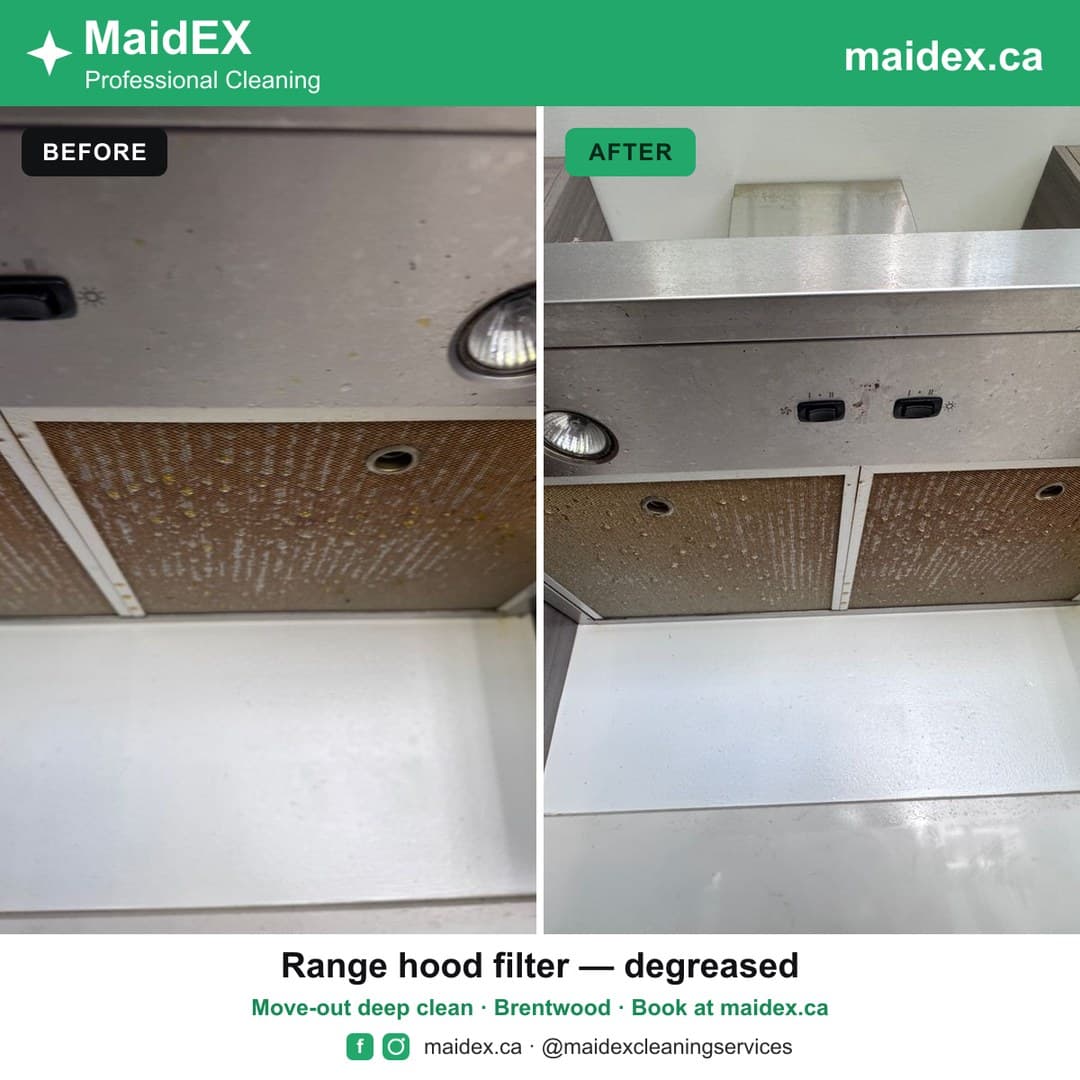
6. The range-hood filter
The metal mesh filter above the stove is almost always coated in old grease. Not every landlord checks it — but the ones who do treat it as the canary: a greasy filter and they start inspecting everything more carefully. It pops out and goes in the dishwasher on the top rack, or soaks in hot water with a little dish soap and baking soda for half an hour and comes out like new.
Where renters waste time (and where BC is different)
This is the part most checklists won’t tell you: a few things you can deprioritise if you’re short on time.
- Ceilings and light fixtures. Unless there’s a visible stain (smoke, water, mould), landlords don’t look up. Don’t lose an hour dusting fixtures before the oven and bathroom are done.
- Inside the dishwasher. It cleans itself every cycle. Clear the food trap at the bottom and make sure it doesn’t smell — don’t scrub the walls.
- Inside the washer and dryer. Empty the lint trap and wipe the rubber gasket on a front-loader (it does grow mildew). Otherwise, leave it.
The carpet exception — and this is where BC differs from the internet. A lot of national articles tell renters not to bother with carpets. In BC that’s risky advice. The Residential Tenancy Branch’s Policy Guideline 1 expects carpets to be steam-cleaned or shampooed at the end of a tenancy of a year or longer (and after a tenancy with a pet). For shorter stays, a thorough vacuum is usually enough. If you have them cleaned, keep the receipt — it’s evidence. Full detail: do you have to steam-clean carpets moving out in BC. (MaidEX doesn’t offer carpet steam-cleaning, so for that step you’ll want a carpet specialist.)
What “wear and tear” means in BC
Getting this wrong is what costs renters their deposit. Under section 37 of the BC Residential Tenancy Act, when a tenancy ends you must leave the unit “reasonably clean, and undamaged except for reasonable wear and tear,” and return all the keys. That’s the whole obligation — and two phrases carry the weight.
“Reasonably clean” is not “spotless.” It means clean enough for the next tenant to move in comfortably — not a showroom finish, and not better than the day you arrived. And reasonable wear and tear is the landlord’s cost, not yours: faded paint, carpet worn thin in the walking lanes, small nail holes from pictures, worn handles and hinges. A landlord can deduct for genuine damage (a burn, a large hole, a torn carpet) and for cleaning if the suite is left dirty enough to need it — but not for ordinary aging.
On the deposit itself: in BC the landlord must return it, or apply to the RTB to keep part of it, within 15 days of the later of the tenancy ending or receiving your forwarding address in writing. For the deeper dive, see what the BC Tenancy Act actually requires and how to get your damage deposit back in BC.
The order we clean in (steal this)
Our crews work an empty suite in roughly this order, because it minimises redoing work:
- Kitchen first. Empty every cabinet and drawer, then get the oven soaking. While it soaks, do the fridge, then cabinets, then counters, then the floor.
- Bathroom second. Grout, tub, toilet, sink, mirror, floor — top to bottom, so dirt falls onto surfaces you haven’t cleaned yet.
- Bedrooms and living areas. Dust top to bottom, including baseboards, then vacuum and mop as the last step.
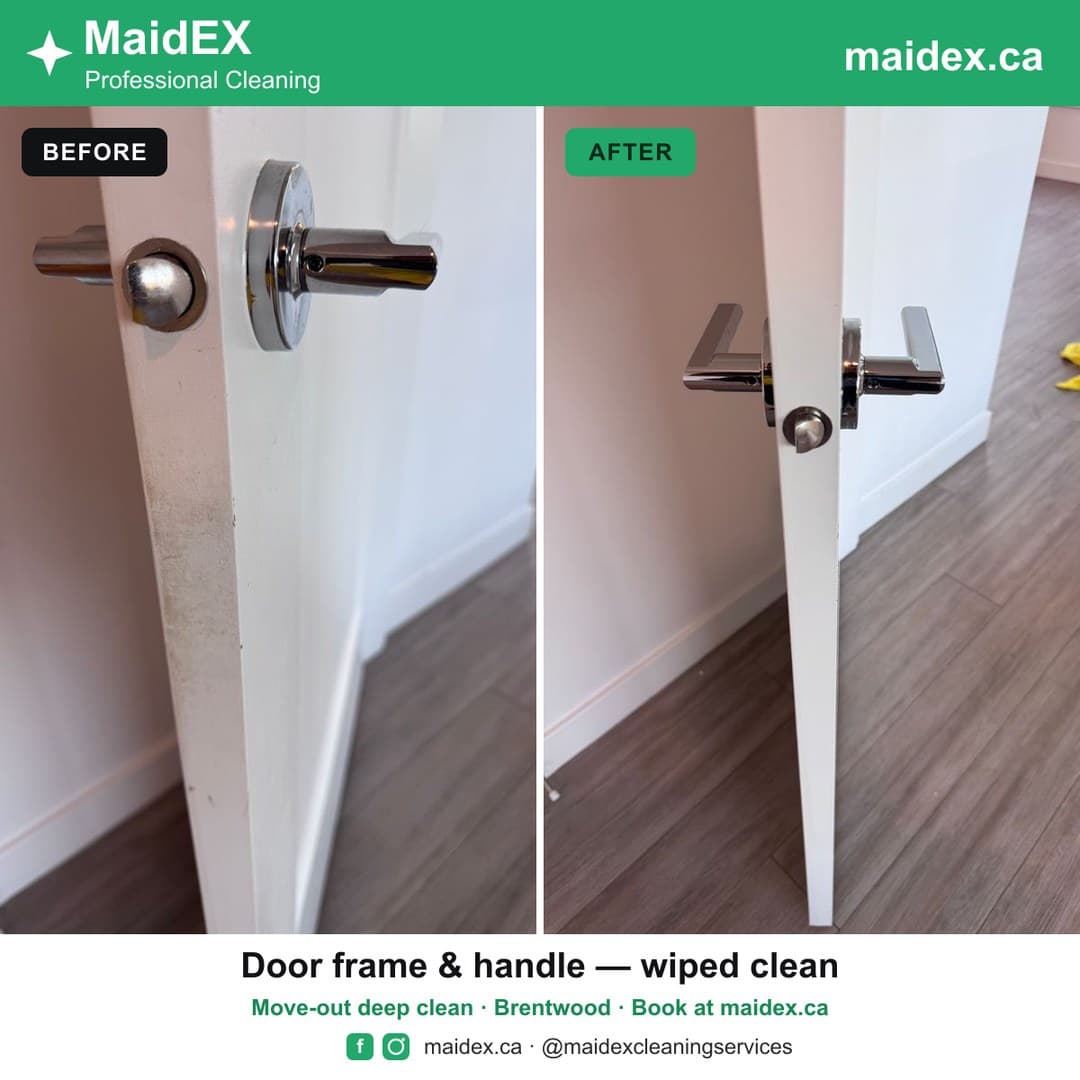
- Doors, handles and light switches at the very end — they’re touched constantly while you clean, so they get re-done last.
Copy that order on your own suite and you’ll save roughly a third of your time.
Moving month-end or July 1? Book early
Most BC tenancies end at month-end, so cleaners, movers and elevators all bunch up around the last and first few days of the month. July 1 is the busiest moving day of the year — in Metro Vancouver, good cleaners (us included) are typically booked solid for that week well before the end of June. If a move-out clean is in your plans, lock it in early; last-minute bookings around July 1 cost more and rarely get your preferred slot.
Doing it yourself? Plan for 6–8 hours for a two-bedroom, more for a house. Most people underestimate it by half — which is exactly how same-day cleaning on top of moving turns into a deduction.
Before & after from recent move-outs
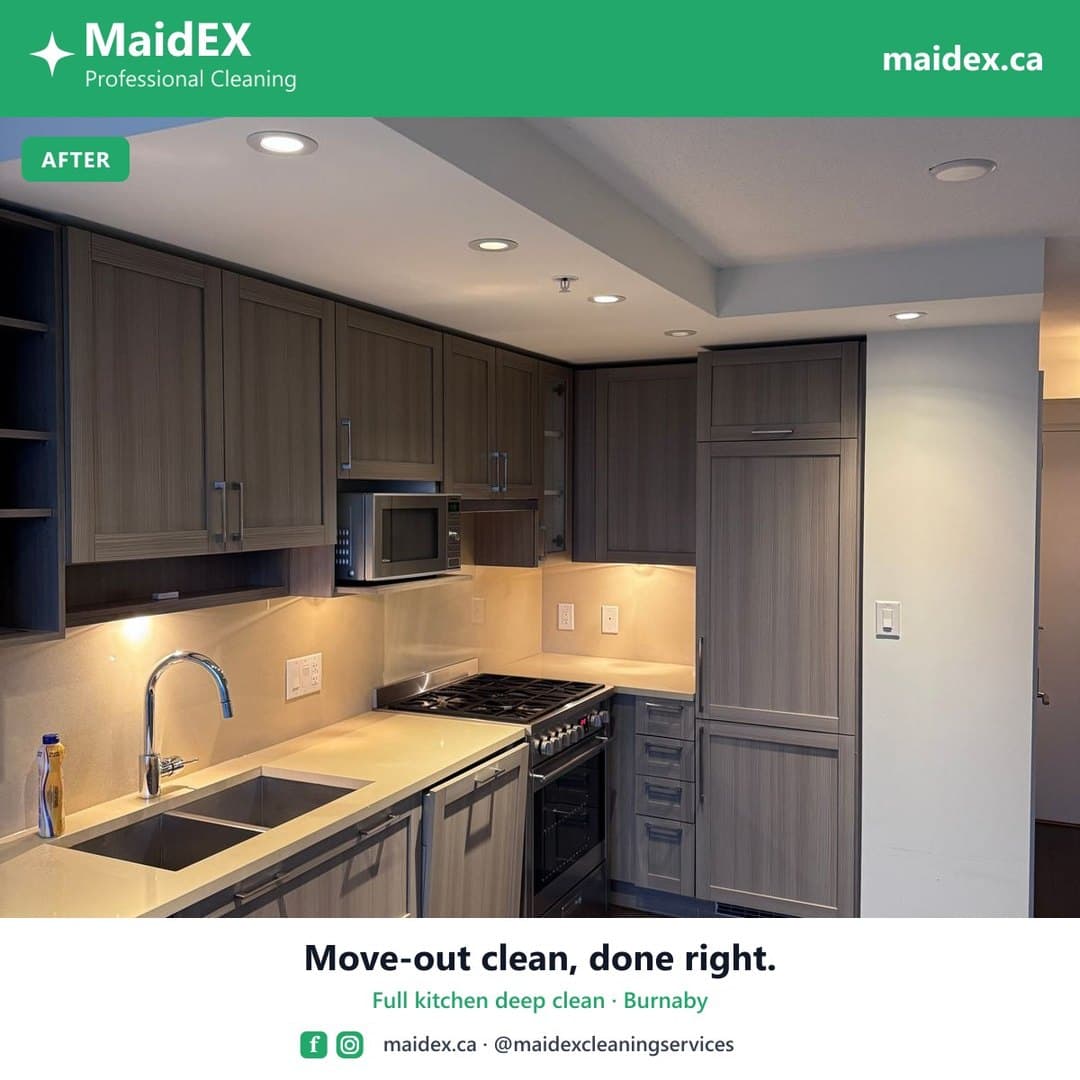
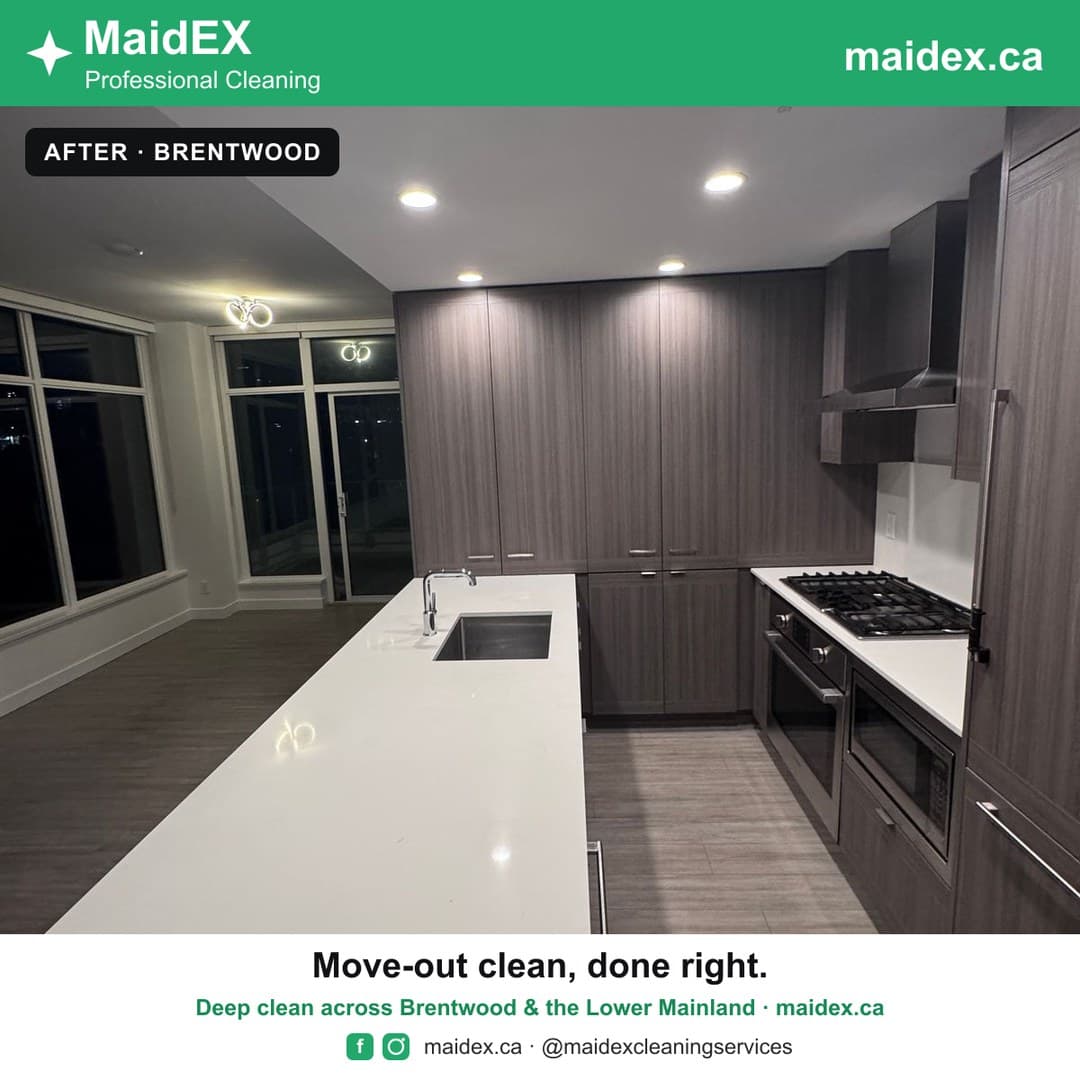
Actual MaidEX jobs in Burnaby and Brentwood — the exact details an inspection checks.

When it’s worth hiring it out
Booking a professional move-out clean tends to be worth it when:
- Your deposit is worth more than the clean (almost always true);
- You’re moving the same day as your inspection (very common at month-end);
- You don’t have the gear for deep oven work, grout brightening or pulling out appliances; or
- You want documentation — we can provide before/after photos and an invoice to keep with your own records.
A MaidEX move-out clean is the most detailed service we offer — built for empty homes, with inside-oven, inside-fridge and inside-cabinet detailing included as standard, at no extra charge. Interior window cleaning (reachable glass, sills and vacuumed tracks) is an optional paid add-on; exterior windows and carpet steam-cleaning aren’t offered. You’ll see a flat, upfront price online before you book — cleaning in BC is 5% GST only, no PST — and the work is done by insured, background-checked cleaners, backed by our satisfaction guarantee. New to hiring a cleaner? Start with how to choose a cleaning service.
Moving out? See your exact move-out price in about 60 seconds.
Flat-rate, 5% GST shown, no PST · Insured & background-checked · Metro Vancouver & the Lower Mainland
Book a move-out cleanQuick recap
- What landlords check: oven door glass, fridge seals, bathroom grout and toilet base, inside cabinets, baseboards and corners, range-hood filter.
- Where to save time: ceilings, dishwasher interior, washer/dryer drums.
- The BC catch: carpets are usually expected to be steam-cleaned after a year-plus tenancy — don’t skip them here.
- The standard: “reasonably clean,” not spotless — and wear and tear is the landlord’s cost.
Frequently asked questions
What do BC landlords actually check during a move-out inspection?
In practice, most landlords focus on a handful of spots: the oven (especially the door glass), inside the fridge and its rubber seals, the bathroom grout and the base of the toilet, inside every cabinet and drawer, baseboards and corners, and the range-hood filter. The walkthrough usually starts in the kitchen. BC also requires a written condition inspection at move-out, compared against your move-in report.
Do I have to steam-clean the carpets when I move out in BC?
Often, yes. The Residential Tenancy Branch’s Policy Guideline 1 sets the expectation that carpets are steam-cleaned or shampooed at the end of a tenancy that lasted a year or longer, and after a tenancy with a pet. For shorter tenancies, vacuuming to a reasonably clean standard is usually enough. Keep any cleaning receipt as evidence. (This is where BC differs from general “skip the carpets” advice you’ll see online.)
Does “reasonably clean” mean the suite has to be spotless?
No. Under section 37 of the BC Residential Tenancy Act the standard is “reasonably clean,” not spotless or professionally restored. It means clean enough for the next tenant to move in comfortably. You don’t have to undo ordinary wear or make the unit better than it was when you arrived.
What counts as reasonable wear and tear I don’t have to fix?
Ordinary aging from normal living — faded or lightly scuffed paint, carpet worn thin in the walking lanes, small nail holes from pictures, and worn fixtures. Under the RTA these are the landlord’s cost, not deductions from your deposit.
When does my landlord have to return my deposit in BC?
Within 15 days of the later of the tenancy ending or the landlord receiving your forwarding address in writing, the landlord must either return the deposit or apply to the Residential Tenancy Branch to keep part of it. Leaving the suite reasonably clean, with dated photos and your signed move-out inspection, is what protects it.
Should I clean inside the oven before moving out?
Yes — the oven is the most-checked appliance, and the door glass is the single most common deduction trigger because it’s the hardest part to clean well. If you only have time for one appliance, make it the oven.
How long does a move-out clean take?
For a two-bedroom suite, expect roughly 4–6 hours for a professional crew and 6–8 hours doing it yourself. Most people underestimate it by about half, which is why same-day cleaning on top of moving is a common reason deposits get docked.
About the author

Milad Hoseini
Founder & CEO, MaidEX Cleaning Services
Written by the MaidEX Cleaning Services Editorial Team and reviewed by Milad Hoseini, who founded MaidEX in Vancouver. MaidEX provides insured, background-checked cleaning across Metro Vancouver and the Lower Mainland. More about MaidEX →
How this guide was made
This guide draws on MaidEX's hands-on cleaning experience across Metro Vancouver and the Lower Mainland, along with publicly available sources. It was drafted with the help of AI tools, then reviewed and fact-checked by our editorial team and approved by Milad Hoseini, Founder & CEO, before publishing.